
Type
Personal Project
Software Used
UE5, Blueprints, Procreate, Perforce, Miro
Inspiration
Escape From Tarkov
Arc Raiders
Project Breakdown
Ongoing Project
AGLS Locomotion System is used
in this project
Developed over four weeks half-time (4 hours/day)
Strong spatial composition
Intentional combat arenas and sightlines
Consistent environmental storytelling
Clear affordances to guide player movement
Created using Unreal Engine 5.6
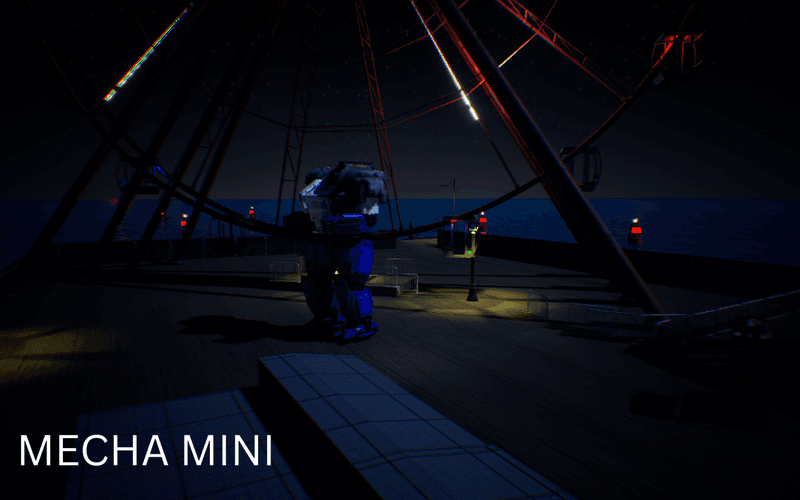
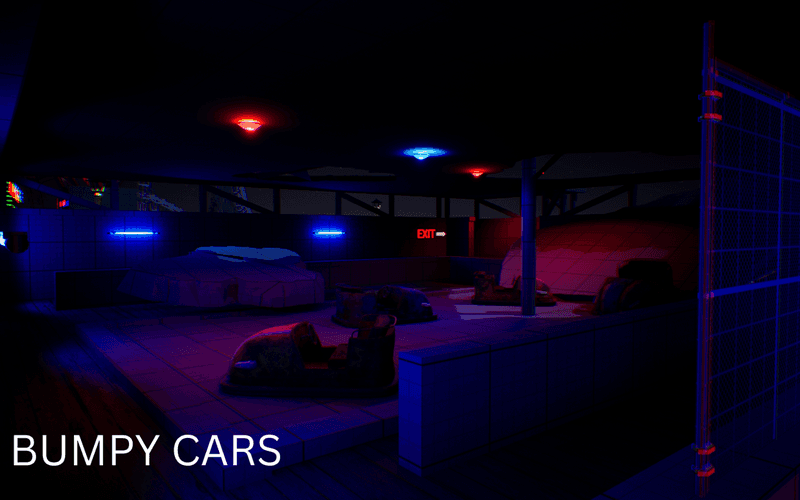
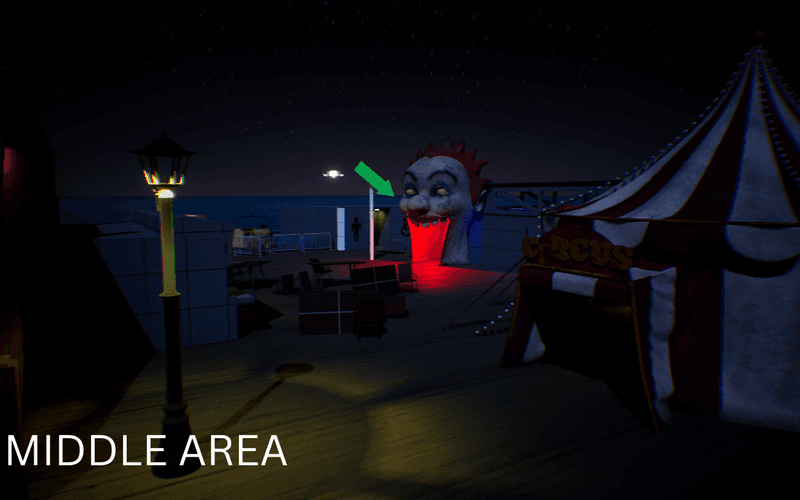
In this third-person project, you play as an adventurer exploring the abandoned carnival pier in a post-apocalyptic cityscape. My primary focus was to create a semi-whitebox experience, with both gameplay and narrative beats working together to keep the player intrigued.
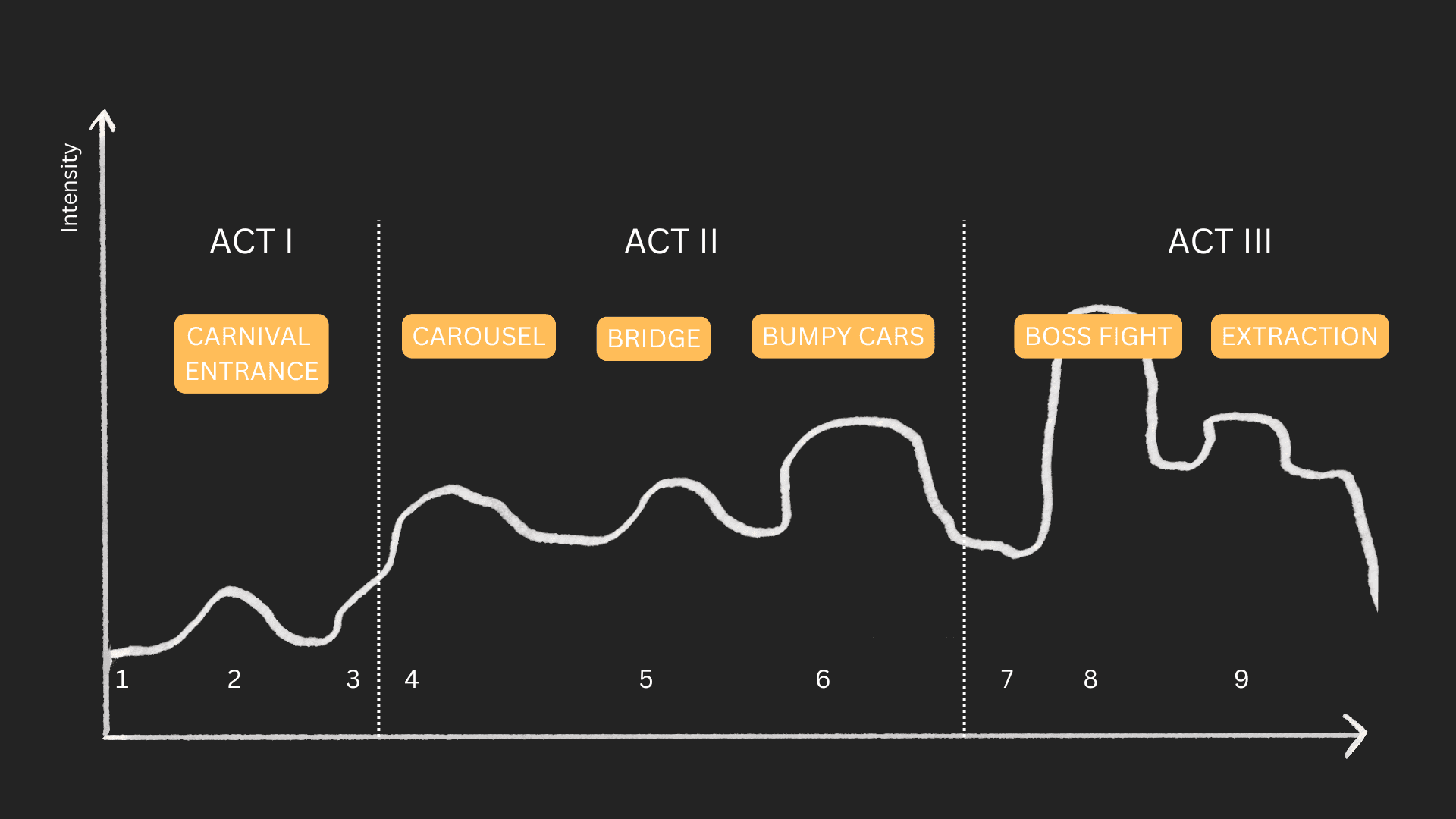
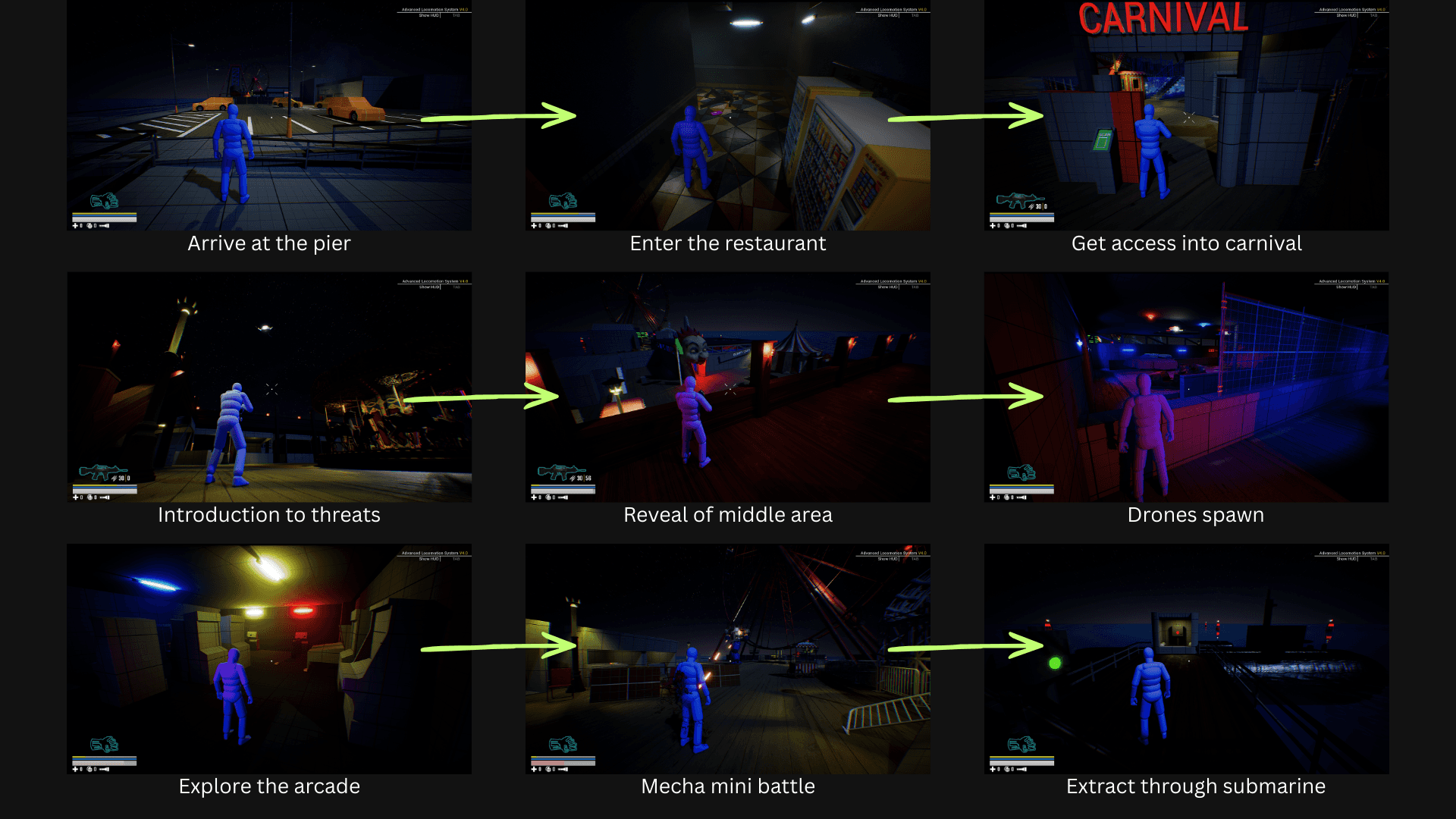
PACING AND GAMEPLAY BEATS
SLIDESHOW
DESIGN TECHNIQUES

RELATED PROJECTS
Action Sequence
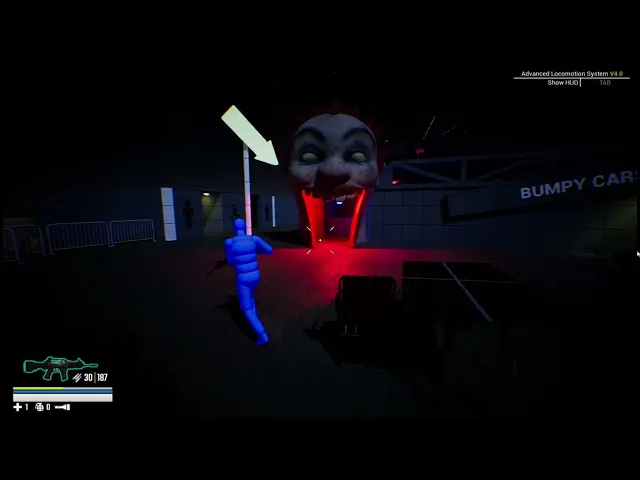
Inspired by the reactive encounter design in Arc Raiders, I introduced enemies through an environmental trigger rather than a traditional spawn.
The carousel appears inactive at first. As the player approaches, it suddenly powers on with lights and sound, breaking the silence and drawing attention. The noise triggers a nearby drone spawn, immediately establishing that the environment is not safe.
This opening moment sets the tone early: interaction creates risk, and sound can attract threats. It teaches the player that the pier reacts to their presence, reinforcing tension from the very start.
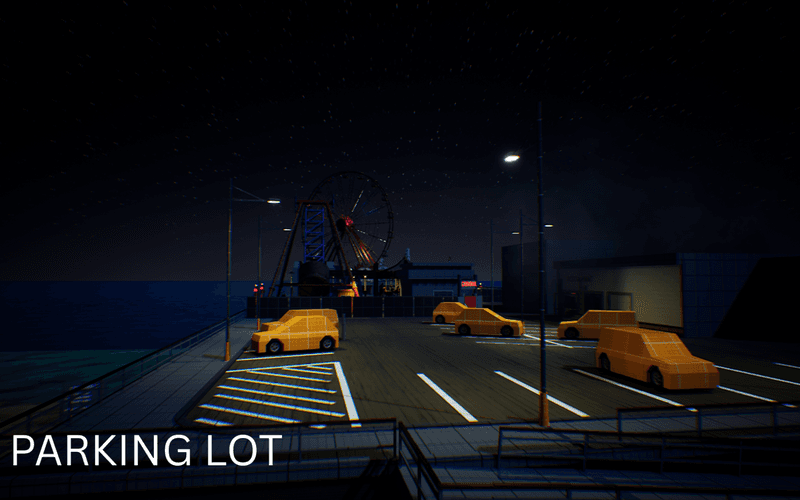
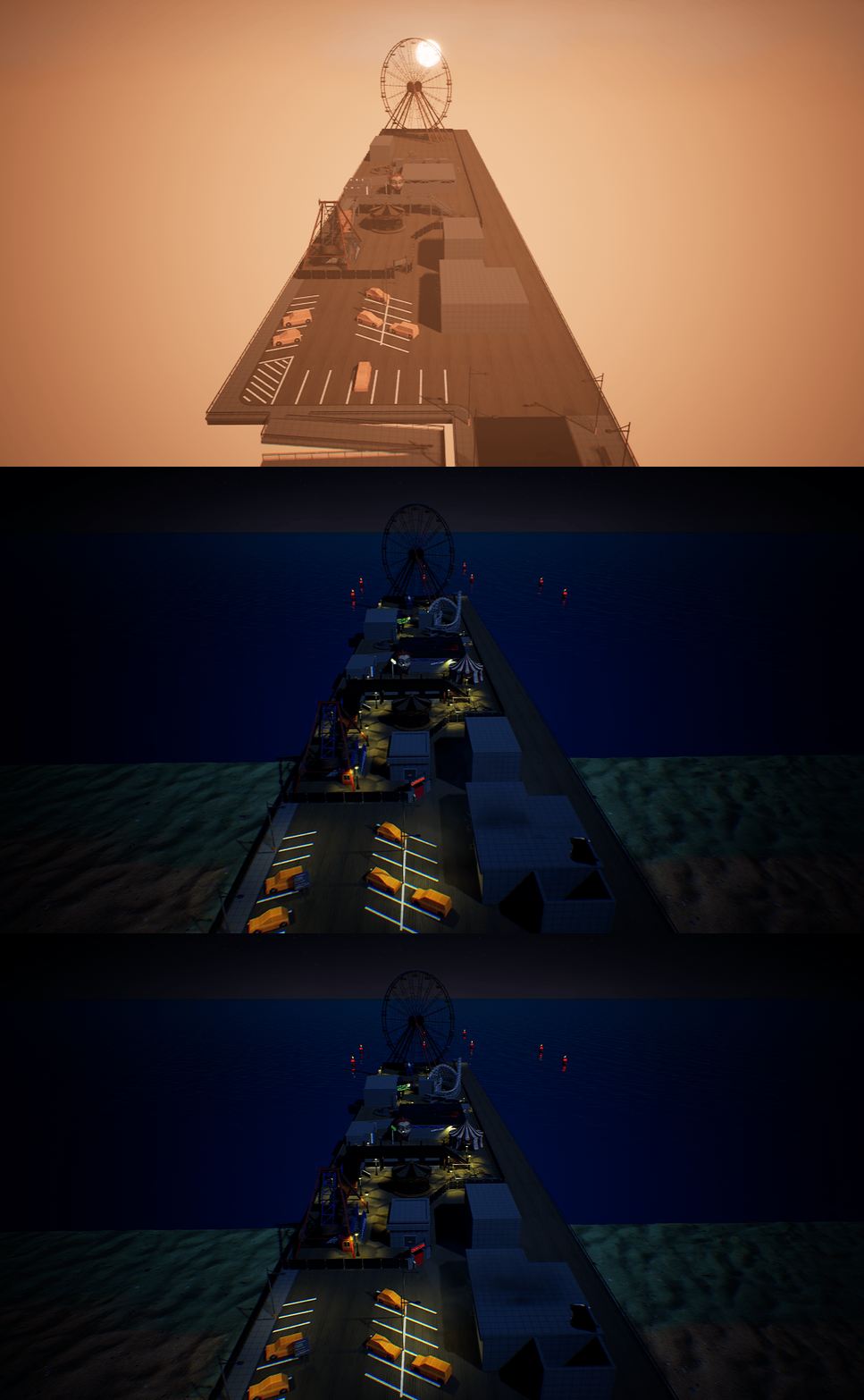
Road before reveal: The level begins in a wide, open space to immediately establish scale and vulnerability. Instead of forcing a tight funnel, I wanted players to feel slightly exposed before discovering the pier’s main attraction.
As you move forward, the Ferris wheel acts as a visual anchor, naturally guiding you toward the carnival.
Road before reveal: The level begins in a wide, open space to immediately establish scale and vulnerability. Instead of forcing a tight funnel, I wanted players to feel slightly exposed before discovering the pier’s main attraction.
As you move forward, the Ferris wheel acts as a visual anchor, naturally guiding you toward the carnival.
Road before reveal: The level begins in a wide, open space to immediately establish scale and vulnerability. Instead of forcing a tight funnel, I wanted players to feel slightly exposed before discovering the pier’s main attraction.
As you move forward, the Ferris wheel acts as a visual anchor, naturally guiding you toward the carnival.
Environmental Storytelling
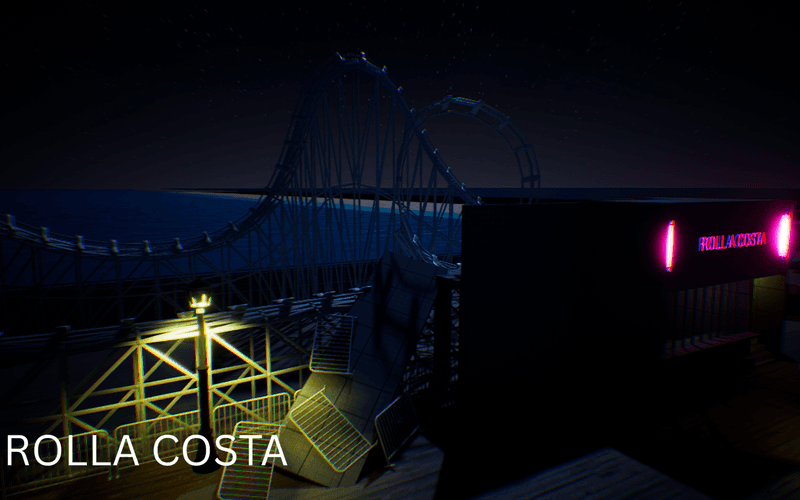
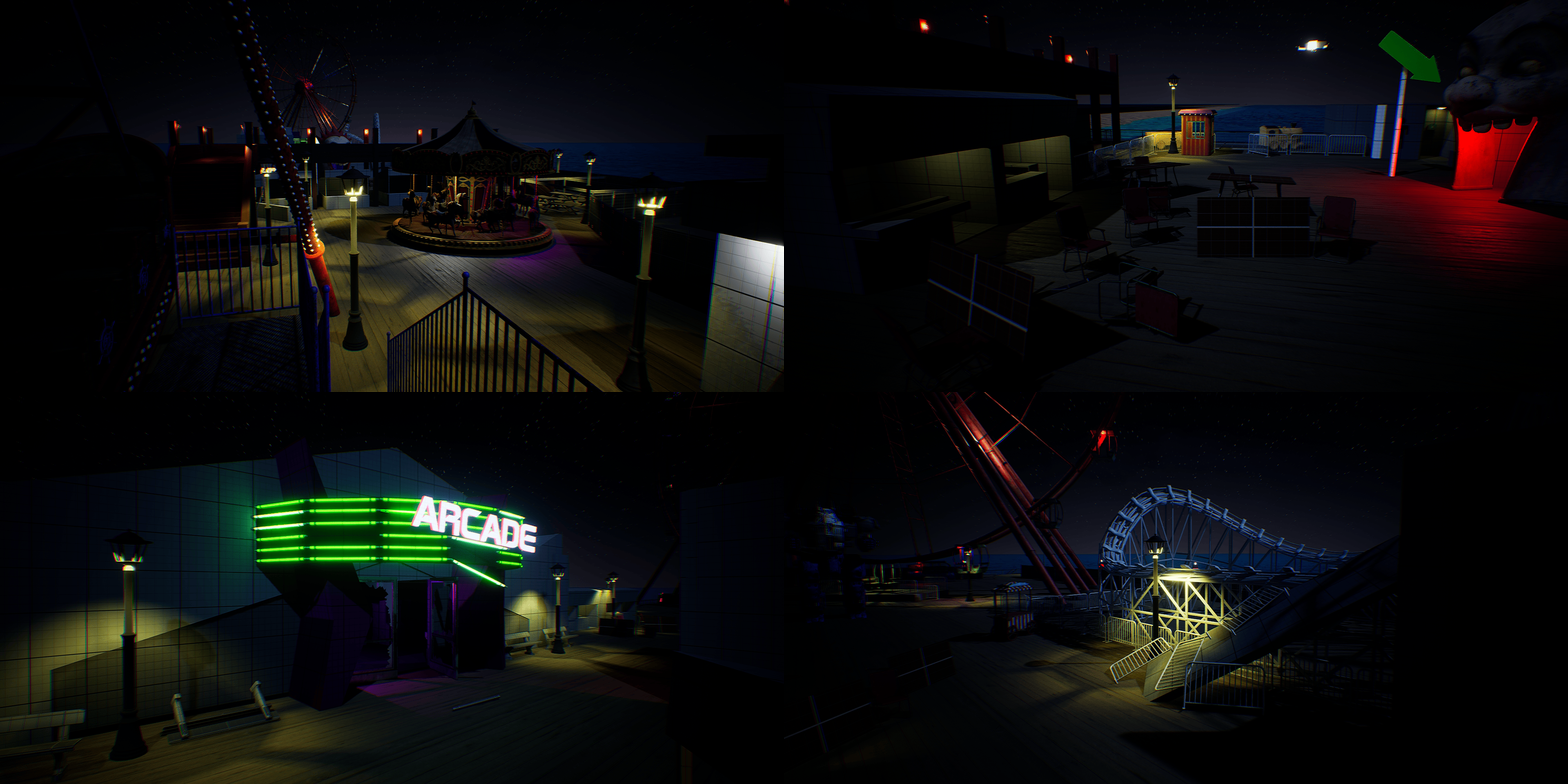
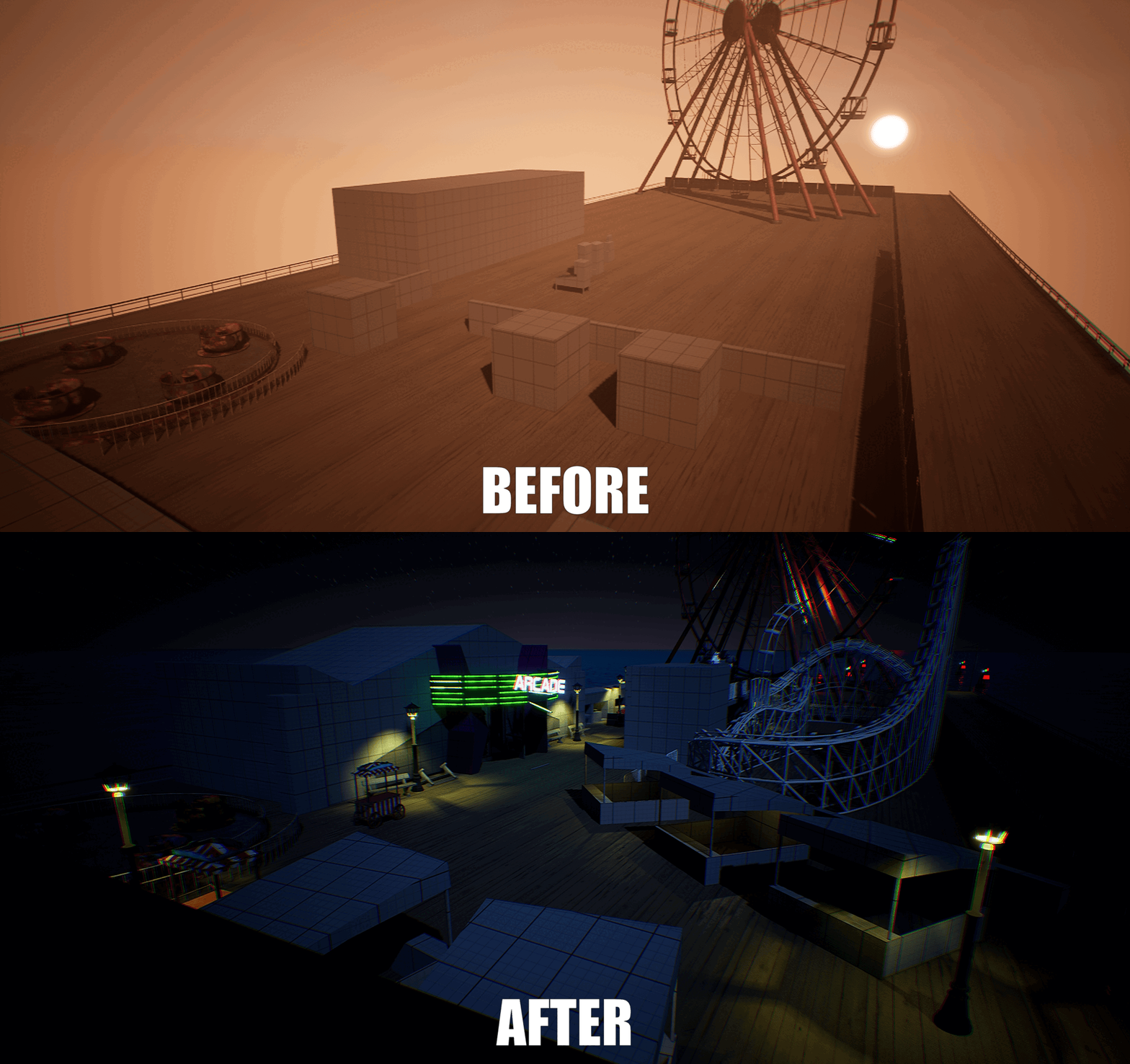
Throughout the pier, I focused on small details to sell the feeling of an abandoned carnival frozen in time. Flickering lights, broken ride structures, and overturned café tables suggest a place that was once lively but was suddenly left behind.
The damaged roller coaster area and scattered props help communicate that something went wrong here without explicitly telling the player what happened. These environmental cues create mood, reinforce tension, and give the player space to absorb the atmosphere between encounters.
Believability
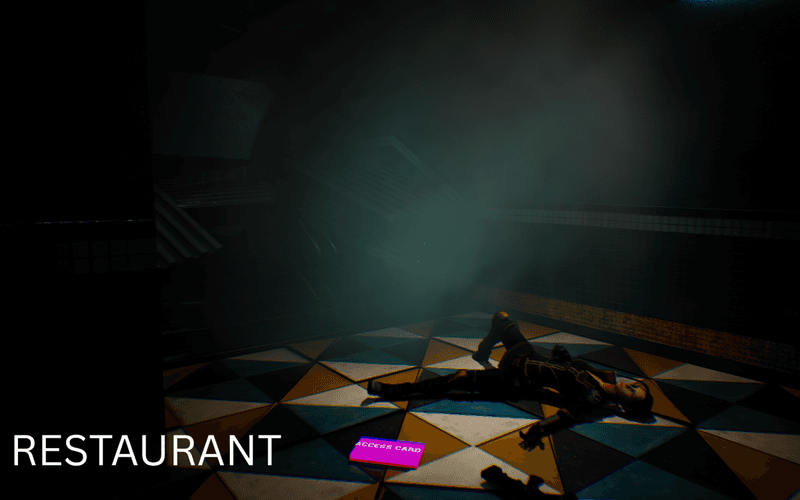
Working with a limited set of 5–6 core assets was challenging, as repetition could quickly break immersion. To avoid the space feeling duplicated or artificial, I created additional custom blockout pieces for the arcade and restaurant areas.
This helped vary silhouettes and layouts while keeping the environment cohesive and grounded, maintaining immersion despite asset constraints.
Desire Paths:
During testing, players naturally created their own shortcuts across the pier cutting between booths, climbing over props, and using gaps near the railings. Instead of blocking these routes, I embraced them. These paths reinforce player control and reward spatial awareness.
Level Loops:
To prevent the pier from feeling like a straight line, I introduced small interconnected loops between carnival stalls, the arcade, and side areas. This allows players to re-engage spaces from different angles without heavy backtracking, maintaining flow while encouraging exploration.
Gathering References:
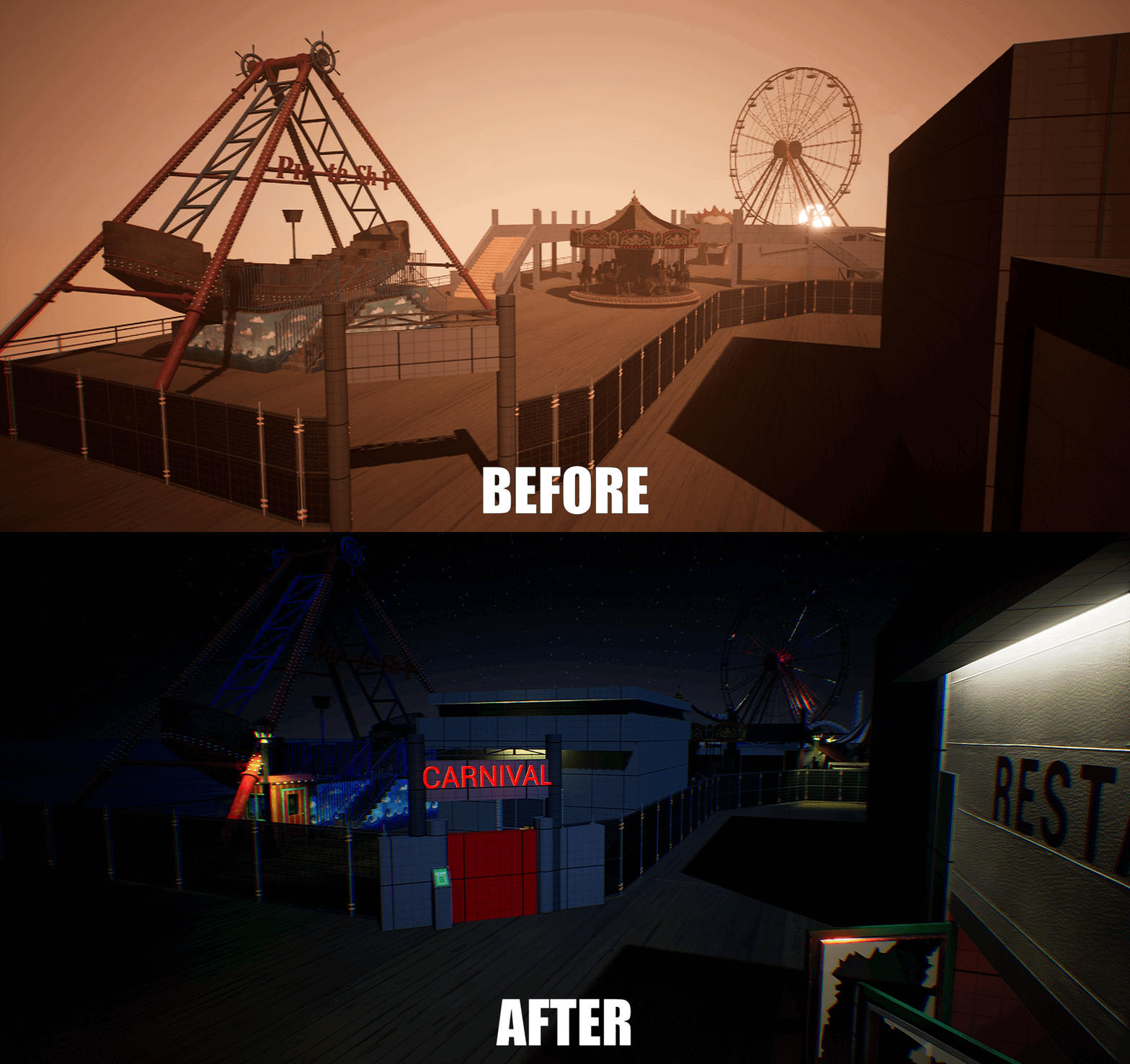
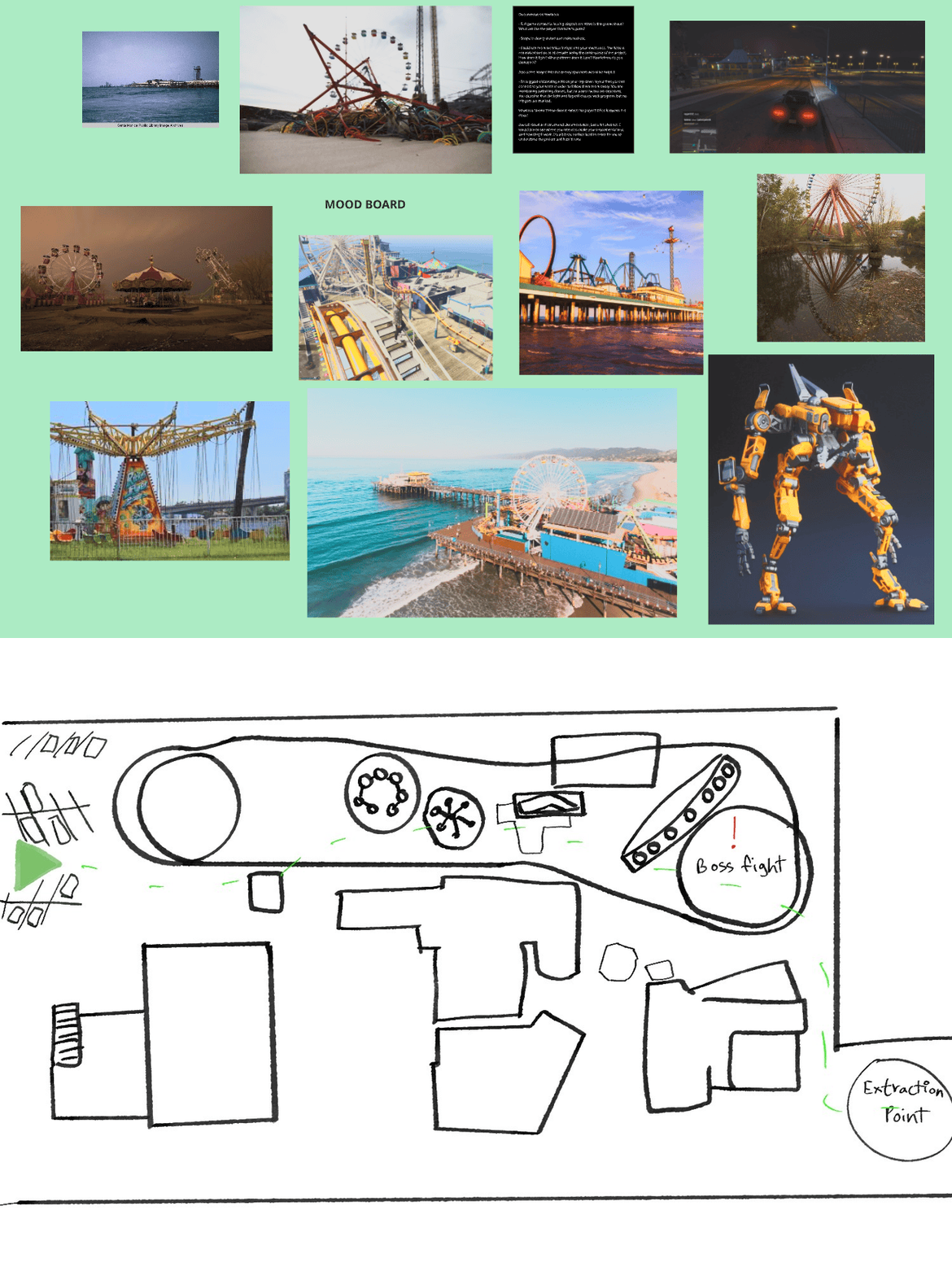
I researched real-world amusement parks and piers alongside post-apocalyptic environments to shape the tone of an abandoned, decaying carnival. I focused on weathered wood, rusted metal, faded signage, and broken ride structures to ground the world in believable detail.
Sketching:
Early on, I used simple top-down layouts and quick blockout sketches to plan player flow, landmark placement, and zone pacing before moving into Unreal Engine.
Iterations
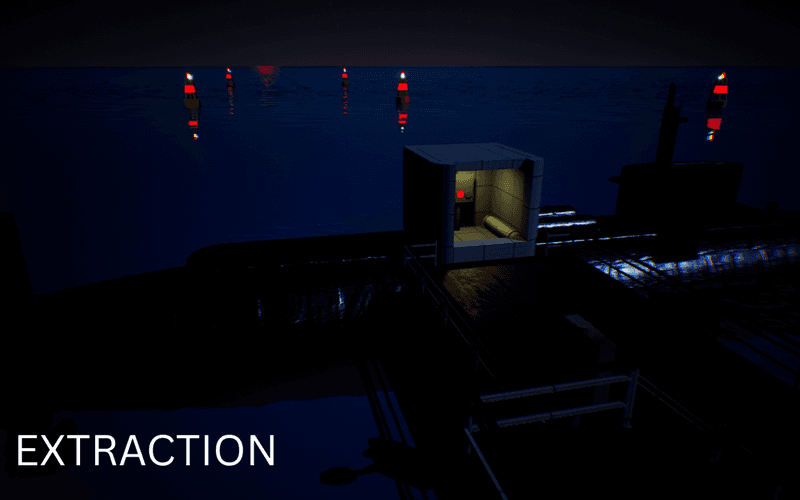
I iterated frequently on each zone to define its identity and gameplay purpose from the open entry space to the carnival mid-section and boss arena.
By organizing the level with grouped actors and modular placements, I could quickly adjust layout, distances, and sightlines on a macro level. This allowed me to refine scale, improve flow, and control when landmarks like the Ferris wheel were emphasized or partially obscured.
Reflections
One of my biggest takeaways from this project is the importance of giving each zone a stronger visual identity. While I spent a lot of time refining gameplay flow and encounter pacing, some areas of the pier could have been pushed further to feel more distinct from one another. Stronger thematic contrast between spaces would make the overall experience more memorable.
I also believe the level could offer more moments of intentional player choice. In some sections, progression feels linear because there are limited alternatives. The areas that feel strongest are the ones where players can pause, explore, and move forward when they decide to and not simply because the path continues.
If I had more time, I would expand the interconnected routes across the pier to create a larger loop that ties the beginning and end together more meaningfully. Strengthening that spatial relationship would improve cohesion and replayability.
Despite these challenges, this project was incredibly rewarding. Seeing the structured blockout slowly transform into a broken, abandoned carnival and deliberately disrupting the clean layout to sell decay was one of the most satisfying parts of the process.
THE LANDMARK
Cont.
LINEAR DESIGN
WORLD BUILDING
EXPLORATION
THE PROCESS
Video Walkthrough